It is time to tick Everest Base camp trek in your hit list? You can start planning from here.
The Everest Base Camp Trek is one of the most iconic trekking adventures in the world, drawing thousands of hikers every year to the heart of the Himalayas. Offering breathtaking views of snow-capped peaks, a chance to immerse in rich Sherpa culture, and the personal achievement of standing at the base of the world’s highest mountain, this trek is a bucket-list experience for adventure enthusiasts.
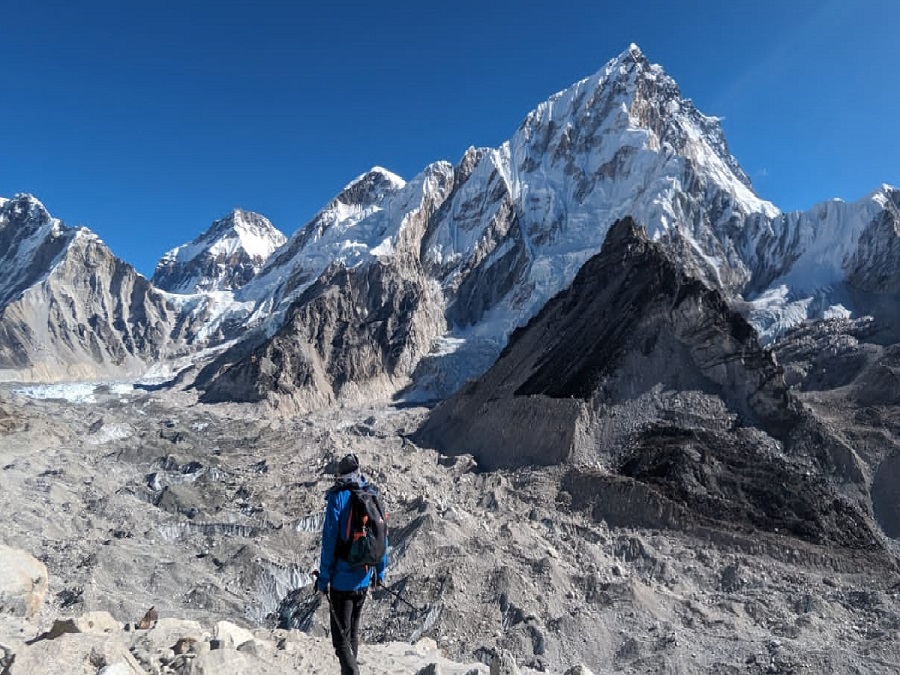
Panoramic Views: The trek offers unparalleled vistas of towering peaks such as Lhotse, Nuptse, Ama Dablam, and, of course, Mount Everest.
Kala Patthar: This vantage point (5,545 meters) provides the best close-up view of Mount Everest, especially at sunrise or sunset.
The Everest Base Camp trek comes with challenges, primarily due to altitude. Symptoms of Acute Mountain Sickness (AMS) include headaches, nausea, and dizziness. To minimize risks:
Ascend gradually and include acclimatization days.
Stay hydrated and avoid alcohol.
Listen to your body and descend if symptoms persist.
Weather can also be unpredictable, so always carry extra layers and check forecasts. Travel insurance that covers high-altitude trekking is essential.
The Everest Base Camp trek is an unmissable adventure that challenges your body, uplifts your spirit, and immerses you in the awe-inspiring grandeur of the Himalayas. Imagine standing in the shadow of the world's tallest peak, surrounded by breathtaking snow-capped mountains, as the warmth and resilience of the Sherpa people inspire you. This journey isn’t just a trek—it’s a life-changing experience that promises unforgettable memories and profound personal growth. Whether you’re seeking the thrill of scaling new heights or the cultural treasures of Nepal’s Khumbu region, this extraordinary expedition will leave you enriched and empowered. Seize the opportunity to embark on this iconic adventure today—because some journeys truly redefine what it means to live fully.
For further information click Everest Base Camp FAQs.
Today is your arrival day. we welcome you upon your arrival at Kathmandu’s Tribhuvan International Airport. Transfer to Hotel in Kathmandu. Prior to the activities, arrange a meeting with your guide for briefing about the necessary formalities on your tour and trek program. Depending upon your arrival time you may spend free time visiting nearby historic/Countryside areas.
We pick you up in the morning with our Local Leader/guide to the Domestic airport for the incomparable first scenic flight. We fly from Kathmandu to Lukla (2827m). The flight itself is exciting. We fly parallel to the Himalayan giants bordering Nepal and Tibetan side of China. Flight time is about 40 minutes and we land at an airstrip built by Sir Edmund Hillary and the Sherpas in the mid-1960s. After landing we meet our porters who carry our equipment during our trek. We also have time to explore the village before hitting the trail. The trek starts with a descend towards the Dudh Kosi River, passing through the many lucky prayers stones and prayer flags where we join the main trail to Namche Bazaar and to the great areas of the Adventure destinations. (Dudh means 'milk' – the waters of the River are a strong milky white from glacial melt.) The walk is easy and after passing through the small village of Chheplung (2650),Ghat (2550m), we soon reach our lodge at Phakding. Our guides and porters will be happy to accompany you for the side walks and visiting local people around or rest reading books and exchanging new card games. (3 hrs)
We start the day from Phakding and cross the River to walk through tracts of blue pine and rhododendron forest that is very spectacular in the spring, when the flowers are in bloom. We cross the Dudh Kosi River at the end of Phakdingma staying on the east and west bank of the River, enjoy great views of the snow-capped peaks of Kusum Kanguru (6369m) and Thamserku (6623m). From here it is only a short walk to Monjo (2835m), where we arrive in time for lunch. Then the walking gets a little tougher and includes a steep ascend to Namche Bazaar. It is a short walk to the entrance of the national park, where our permits are checked before we descend quite steeply to again cross the Dudh Kosi to Jorsale (2805m). The trek continues upstream on generally flat terrain, crossing back to the right bank, to the confluence of the Bhote Kosi and Dudh Kosi Rivers. After crossing a large and stable suspension bridge high above the River we climb steeply to the village of Namche Bazaar. A slow and steady pace is recommended on this section of the climb and we are encouraged to make the most of the fantastic photographic opportunities as the peaks of Everest, Lhotse, Nuptse and Taweche come into view for the first time. You may notice you are travelling a little more slowly as the effects of altitude start to become apparent. Take your time on this path which is used by the local peoples as a 'foot highway' on this important trading route. At Namche we stay in a lodge in the heart of the village. (6:30 hrs)
We stay at Namche for a second night to allow us proper acclimatization to the high altitude and to enable full exploration of the town and its surrounds. Namche is a prosperous village, situated in a large, protected hollow. It gained its importance during the period when Tibetan salt was traded for the lowland grains of Nepal. Today quite an amount of trade continues at Namche and Tibetans are sometimes seen in the village trading rugs and Chinese-made goods, clothing, salt and dried meat. It is recommended that you take the opportunity to see both the sunrise and sunset views from the national park headquarters above the village. The panorama can be stunning at both times of the day with a superb view of the Khumbu peaks, including great sightings of Everest. After breakfast Your guides be on hand to offer advice and to escort you on the walks. The option is the steep climb out of the village bowl to the flatter areas around and above Shyangboche Airstrip, Everest View Hotel where beautiful views of Everest, Amadablam, Lhotse, Tawoche, Peak 38, Thamsherku abound. There are various options, including a walk with a series of great peaks rearing to well over 6,000 meters just to the west. Alternatively you can visit the national park headquarters to see the interesting displays of Sherpa lifestyle and culture.
Our route of today to Tengboche weaves in and out of side valleys, making small ups and downs, to the teashops of Kenjoma, and joins the trail from Khumjung just before a collection of Mani stones. The views of Everest and Ama Dablam are excellent from this part of the trek. We pass the small settlement of Sanasa from where the trail drops towards Phunki Thanga (3250m). From here the trail climbs steeply through forests and around Mani stones as it follows the side of a hill to the saddle on which the monestary of Tengboche sits at 3870m. The view from here is rightly deemed to be one of the worlds most magnificent. Kwangde (6187m), Tawachee (6542m), Everest, Nuptse, Lhotse (8501m), Ama Dablan, Kantega and Thamserku provide an inspiring panorama of Himalayan giants. We spend the night in Tengboche village (5 hrs).
From Tengboche we start our day by descending through forests of birches, conifers and rhododendrons to the village of Dibuche. From here the level trail passes many Mani walls in a deep rhododendron forest. After crossing the Imja Khola River the route climbs past some magnificently carved Mani stones to Pangboche (3901m). This is the highest year-round settlement in the valley, and the Pangboche gompa is the oldest in Khumbu once contained relics that were said to be the skull and hand of a yeti. Beyond Pangboche the route enters alpine meadows above the tree line, mostly consisting of scrub juniper and tundra. We cross Imjatse River and arrive in Dingboche, which is a labyrinth of walls and pastures.Dingboche is the valley made by Imjatse River that flows down from the Island peak.This is the best valley to be to feel just in the lap of the beautiful Mountain Amadablam,Kantega and other peaks. (5 hrs).
The most important thing to acclimatise in high altitudes is a slow ascend. Therefore it is imperative that we spend an additional night at Dingboche to aid the acclimatisation process. A good way to spend the day is to hike to the Nzagazong Parbat. From here we have majestic views of Island Peak (6189m), the rehearsal trekking peak, south face of Lothse and the giant of Ama Dablam, Mt. Makalu(8030m). After enjoying the views here we return back to Dingboche (4 hrs)
It is a tough walk today up the valley to Lobuche, so do take your time and ensure you are well hydrated. From Dingboche we ascend the small ridge behind the village above Pheriche Valley. From the chorten at the top, the peaks of Taweche and Cholatse (6440m) dramatically line the valley to the west. To the north, Lobuje Peak (6119m) and the snowfields of the Cho La can be seen. At Dughla (4620m) we take a light lunch at the foot of the huge terminal moraines of Khumbu Glacier, which has flowed off Everest, and in the afternoon we climb steadily to reach a ridge with a line of memorial cairns, built in memory of Sherpas and other climbers who have died on various Everest expeditions over the last 50 years. From here the view is spectacular; Pumori (7145m), Lingtren (6697m), Khumbutse (6623m), and, across the border in Tibet, Changtse (7550m) are seen at the head of the valley, whilst Everest is hidden behind the towering walls of Nuptse and Lhotse. We then follow the valley stream to our lodge at Lobuje, arriving early afternoon. (5 hrs)
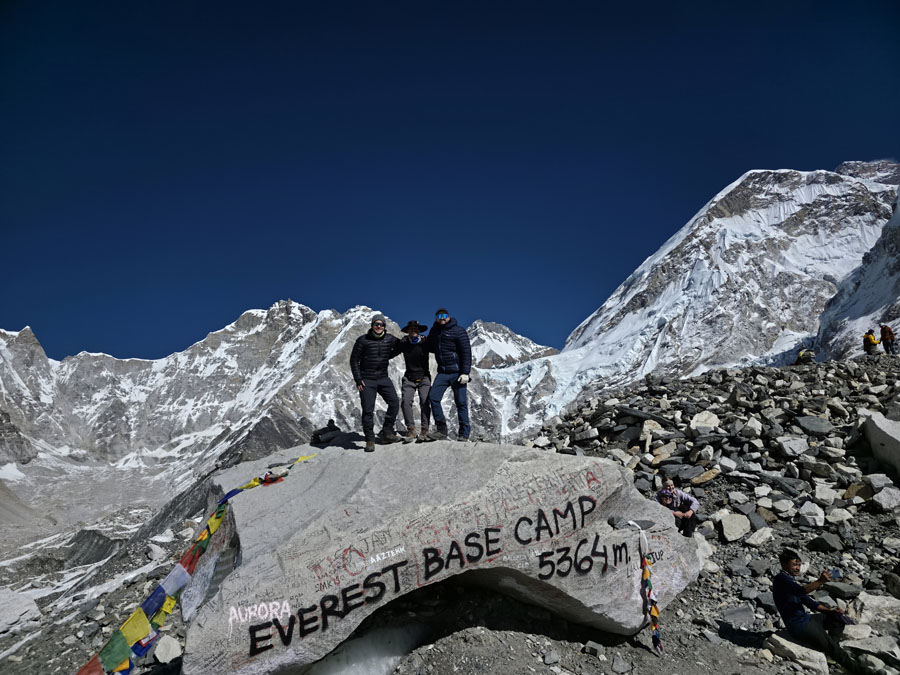
The first section of today’s trail follows the western side of the broad Khumbu valley and ascends gently through meadows besides the glacial moraine. The ascend becomes steeper and rougher as it crosses several side moraines. After rounding a bend in the trail, the conical peak of Pumori comes into view. On the lower slopes of this mountain a ridge extending to the south terminates in a small peak, known as Kala Pattar (5545m), meaning 'black rock'. The trail then makes a short descend onto the sandy, flat expanse of Gorak Shep. From here, we continue to Everest base camp and return to this small settlement. (6 hrs).
To go to Pheriche we retrace our steps back to Dughla, and then go straight down hill from the bridge to reach an lower trail, staying high above the valley floor. The views from here are great valley, meadow. You can easily recognise Lobuche Peak and the Cholatse is visible in the distance to the left of Ngazong Parbat.It is amazing how quickly we retrace the trail that was a challenge to ascend en route to Everest Base Camp. We should be well acclimatised and we head quickly back downhill to Dughla and then taking a different route following the wide alpine valley to Pheriche for a long tea break. (7 hrs)
From Pheriche we ascend a short steep trail to the top of a small ridge for great views of Imja Valley, Ama Dablam and Kantega, before taking lunch at Orsho. In the afternoon we again descend to Shomare and later pass through Lower Pangboche to reach the suspension bridge over the Imja Khola River and re-trace our steps to Debuche and on to Tengboche.(6hrs)
From Tengboche we descend steeply to the suspension bridge at Phunkitenga and after a break and a cup of tea we cross the Dudh Kosi and ascend to Tashinga. From here the trail contours high above the valley through Shanasa before returning to Namche Bazaar, where we stay and enjoy a final opportunity to visit the shops in the bazaar. ( 5 hours)
Today we slowly head back to Phakdingma through the busy Namche.We descend down to Jorsale bridge through the jungle and rough trail down and then walk to the Monjo through River bank, cross long suspension bridge and then gradual up and down to Phakdingma.This is a short and sweet walk to have rest on our way back before getting to the Lukla next day.(3hrs)
There is no rush today as we retrace our steps back to Lukla. We head forward from Phakding after the breakfast and, although the final ascend up to Lukla is a surprise for most trekkers, reach the airport in the early afternoon. Lukla is famous for its end of trek celebrations, although we should not overdo it, as the plane ride back to Kathmandu is not best enjoyed with a hangover! (3 hours)
We rise early in the morning to be ready for the arrival of our aircraft for the flight back to Kathmandu. We are met at the airport and transferred to our hotel, located in Kathmandu(have choice the Hotel). You do not miss to clean yourself , laundry and rest to feel low altitude. In the Evening have a party night .Our guide can recommend you the best and memorable restaurant to experience party time and place.
Our Tour officer meets you in Hotel for the Departure Transfer to Kathmandu’s International Airport. We always anticipate welcoming you back to Nepal for various other stunning Trekking with our best service in Nepal, Bhutan, Tibet, India etc.
“My friend and I did a 15 day trek to Everest Base Camp and through 2 of the 3 high passes. Bikash Maharjan was our guide. He was very knowledgable and prepared for any dangerous situations. We really ”
“Professional organization by a great team! Nov 2025 • Friends Great experience with perfect organization. After our arrival in Kathmandu we were received very friendly. Bimal and Hari took a lot ”
“110% recommendation - kind, responsible and funny guides Nov 2025 • Friends I would give 6 stars if possible. After we arrived in Kathmandu (and one day before the actual adventure was about to st”
You Might Also Like